
July 10, 2026
Table of Contents




Table of Contents
Choosing the right vacuum sealing bag goes far beyond picking a size that fits the product. It requires matching film thickness, barrier level, print finish, and structure type to the packed item and the processing conditions it will face. Vacuum bags for food packaging typically range from 30 to 300 microns in thickness for laminated structures and 40 to 200 microns for dedicated vacuum films, with barrier classifications such as medium barrier, high barrier, and high temperature resistant grades built for applications ranging from edible oil and snacks to processed and frozen food. This article breaks down the technical specifications that matter most when specifying a vacuum sealing bag, including thickness, barrier structure codes, print options, and the size considerations that determine whether a ag performs correctly on the packaging line and on the shelf. Vishakha Polyfab manufactures vacuum pouches and bags across this full specification range under its VISHVACU product line.
It is tempting to think of a vacuum bag purely in terms of its length and width, but the specification sheet behind a vacuum bag determines whether it will actually protect the product inside it. A bag cut to the correct dimensions but built with the wrong barrier level will still allow oxygen ingress that shortens
shelf life. A bag with the right barrier but insufficient thickness may puncture during vacuum draw or transport. This is why packaging engineers specify vacuum bags using a combination of structure code, thickness, print requirement, and finish option rather than dimensions alone.
Vacuum and laminated film structures are commonly classified using short codes that describe their core performance characteristics.
| Code | Meaning | What It Indicates |
|---|---|---|
| MB | Medium Barrier | Nylon-based structure suited to products with moderate oxygen sensitivity. |
| HB | High Barrier | EVOH-based co-extruded structure for products highly sensitive to oxygen. |
| HT | High Temperature Resistance | Structure engineered to withstand retort, pasteurization, or boilable conditions. |
| LF | Laminated Films | Structure built through adhesive or thermal lamination rather than co-extrusion alone. |
Specifying the correct code early in the sourcing process helps avoid mismatches between what a converter can supply and what the product actually requires. A high fat snack food, for example, benefits from an HB structure to slow oxidative rancidity, while a product intended for sous vide cooking needs an HT rated structure regardless of its barrier classification.
Film thickness, typically measured in microns, is one of the most important specifications because it directly affects puncture resistance, flexibility, and cost.
| Thickness Range | Typical Use Case | Notes |
|---|---|---|
| 30 to 60 microns | Lightweight laminated pouches, dry snacks | Lower cost, suited to products without sharp edges. |
| 60 to 100 microns | General food and dairy vacuum packaging | Balanced strength and flexibility for common applications. |
| 100 to 150 microns | Meat, poultry, and seafood vacuum bags | Added puncture resistance for bone-in or sharp products. |
| 150 to 200 microns | Bulk and institutional vacuum packaging | Reinforced for repeated handling and heavier fill weights. |
| 200 to 300 microns | Heavy-duty laminated and industrial applications | Maximum strength for demanding mechanical conditions. |
Vishakha Polyfab’s laminated film range spans 30 to 300 microns, while its dedicated vacuum pouch and vacuum bag range spans 40 to 200 microns, giving packaging teams a wide window to match thickness to product weight, shape, and handling conditions.
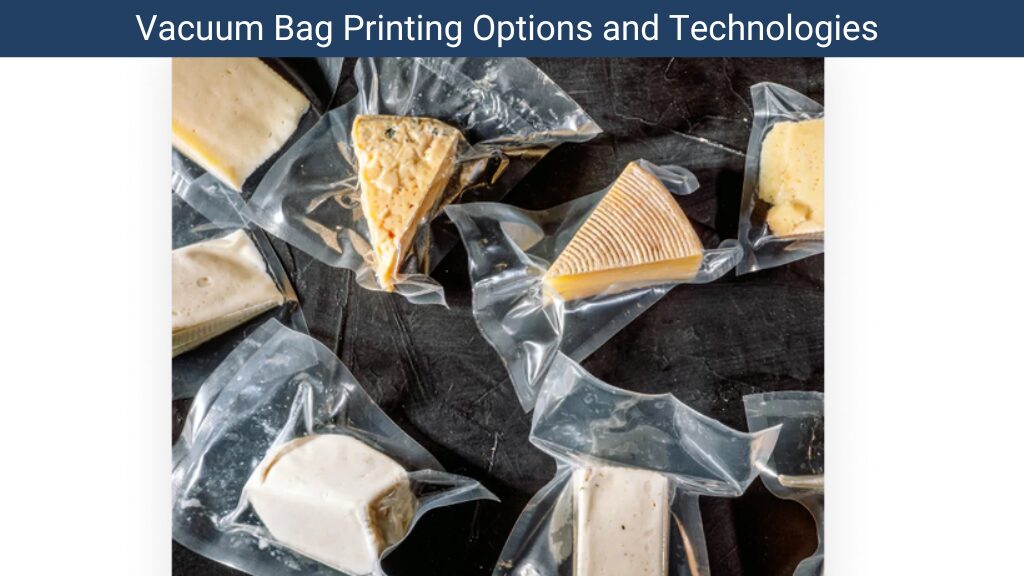
Print capability is another technical dimension buyers should specify clearly, since it affects both brand presentation and production lead time.
Our Other Product
Vacuum bags are also specified by finish, which affects both appearance and functional properties such as light protection.
| Finish Option | Description | Common Use |
|---|---|---|
| Natural | Clear or translucent film with no added color. | Products where visual inspection through the pack is desired. |
| Pigmented Vacuum Bags | Film with a solid color added throughout the structure. | Products needing light protection or a specific brand color base. |
| Tinted Vacuum Bags | Film with a light color cast while retaining some transparency. | Balance between visual appeal and mild light protection. |
The technical specification table below reflects common vacuum bag and laminated film applications drawn from typical food packaging categories, including edible oil and clarified butter, chips, wafers, popcorn, namkeen and nuts, bars, candy, chewing gum and cookies, cereals, processed, frozen and hot food, vegetables and fruits, mayonnaise, ketchup and mustard sauce, soft drinks, fruit juices and mineral water, and rice, sugar, salt, spices, and flour.
| Food Category | Suggested Code | Thickness | Key Reasoning |
|---|---|---|---|
| Edible oil and clarified butter | MB or HB with light protection | 60 to 100 microns | Prevents rancidity from light and oxygen exposure. |
| Chips, wafers, popcorn, namkeen, nuts | HB with metallized or foil layer | 40 to 80 microns | High fat content needs strong oxygen barrier. |
| Bars, candy, chewing gum, cookies | MB with moisture barrier | 40 to 80 microns | Protects texture and prevents stickiness. |
| Cereals | MB with moisture barrier | 50 to 100 microns | Maintains crunch and prevents moisture uptake. |
| Processed, frozen, and hot food | HT rated HB structure | 100 to 150 microns | Must withstand heat processing and freezing cycles. |
| Vegetables and fruits | Controlled barrier, breathable option | 40 to 80 microns | Manages ongoing respiration after harvest. |
| Mayonnaise, ketchup, mustard sauce | HB with strong seal integrity | 80 to 150 microns | Handles liquid fill weight and oxidation sensitivity. |
| Soft drinks, fruit juices, mineral water | MB to HB depending on shelf life target | 80 to 150 microns | Preserves flavor and carbonation over shelf life. |
| Rice, sugar, salt, spices, flour | MB with moisture and aroma barrier | 50 to 100 microns | Prevents clumping and aroma loss during storage. |
Vishakha Polyfab manufactures laminated and vacuum packaging films across the full specification range described in this article, from 30 to 300 microns in its VISHLAMI laminated film range and 40 to 200 microns in its VISHVACU vacuum pouch and bag range, with medium barrier, high barrier, and high temperature resistant structures available. The company offers nine color rotogravure and CI flexo printing along with natural, pigmented, and tinted finish options, and its films serve applications spanning edible oil, snacks, confectionery, cereals, processed and frozen food, fresh produce, sauces, beverages, and dry staples such as rice, sugar, salt, spices, and flour. This range allows packaging teams to source a precisely matched vacuum bag specification from a single manufacturer rather than working across multiple suppliers for different product categories.
Specifying a vacuum sealing bag correctly means looking well beyond the bag’s length and width. Structure code, film thickness, print method, and finish all combine to determine whether a vacuum bag will actually deliver the shelf life, mechanical strength, and shelf presentation a product needs. Using the specification framework outlined in this article, from barrier classification through thickness ranges to finish options, gives packaging buyers a clear, repeatable way to match a vacuum bag to their specific product category and processing requirements.
Meat and poultry vacuum bags generally perform best in the 100 to 150 micron range, since this thickness provides enough puncture resistance for bone in products while remaining flexible enough for efficient vacuum draw.
HT stands for High Temperature Resistance, indicating the film structure is engineered to maintain seal integrity and barrier performance during retort, pasteurization, or boilable sous vide processing conditions.
Not necessarily. Thicker films add puncture resistance and durability but also add cost and can reduce flexibility, so the ideal thickness is the minimum that reliably protects the specific product rather than the maximum available.
Medium barrier structures are typically nylon based and suit products with moderate oxygen sensitivity, while high barrier structures use EVOH or similar layers to provide significantly lower oxygen transmission for highly oxygen sensitive products such as fatty snacks and cured meats.
Yes, most manufacturers, including Vishakha Polyfab, offer combined customization of print, from single color to nine color designs, along with natural, pigmented, or tinted finish options within the same film structure.
The right barrier level depends on the product's fat content, moisture sensitivity, and target shelf life. Products high in fat or with a long ambient shelf life target generally need a high barrier structure, while lower risk, shorter shelf life products can often use a medium barrier structure at lower cost.

Vishakha Polyfab Pvt. Ltd. is a global pioneer in high-barrier flexible packaging, specializing in advanced 9-layer co-extruded PA/EVOH-based films. Headquartered in Ahmedabad, India, the company utilizes world-class Brampton Engineering (Canada) and Aqua Frost® water-quenched technology to deliver superior shelf-life extension solutions. From Modified Atmosphere Packaging (MAP) to deep-draw thermoforming applications, Vishakha Polyfab delivers compliant, high-performance materials that protect product integrity throughout complex international supply chains. Their expertise in vacuum packaging, thermoforming, and lidding films helps enterprise-level brands in the food, pharmaceutical, and industrial sectors optimize packaging performance and sustainability.

Make Vishakha Polyfab the silent guardian of your products to preserve their vigour and enhance the quality of user interaction with them.
Sign Up for Our Newsletter
Corporate Head Office
Social Media
An ISO & BRCGS Certified Company


Manufacturing Address

