
June 22, 2026
Table of Contents




Table of Contents
Cheese manufacturers and dairy exporters worldwide depend on specialized vacuum bags to preserve product quality, prevent moisture loss, and extend shelf life across multi-week international supply chains. Vishakha Polyfab’s VISHVACU food-grade vacuum bags, engineered with PA/EVOH multi-layer barrier films, maintain optimal oxygen transmission rates (OTR) that prevent oxidation, mold growth, and flavor degradation in aged, soft, hard, and artisanal cheeses. This article examines how premium vacuum bags protect cheese quality during storage and transport, compares material options for commercial producers, and demonstrates why bulk cheese exporters from Europe, North America, and Asia increasingly source customized vacuum packaging solutions from India’s leading flexible packaging manufacturers.
Cheese preservation represents a critical challenge for global dairy companies. Unlike fresh milk requiring refrigeration, cheese demands protection from environmental factors that compromise sensory quality—oxidation darkens color, moisture loss causes shrinkage and cracking, and oxygen exposure accelerates mold development and rancidity. Vacuum bags designed specifically for food storage create an oxygen-free environment that maintains cheese integrity from production facility through retail shelves, regardless of transportation duration.
Commercial cheese producers—from small artisanal cheesemakers to multinational dairy cooperatives—require vacuum bags that balance functionality with cost efficiency. The right packaging solution must provide gas barrier protection while remaining economical at scale. Bulk cheese exporters sourcing from India’s flexible packaging manufacturers gain access to advanced barrier film technology at wholesale pricing that improves their competitive margins.
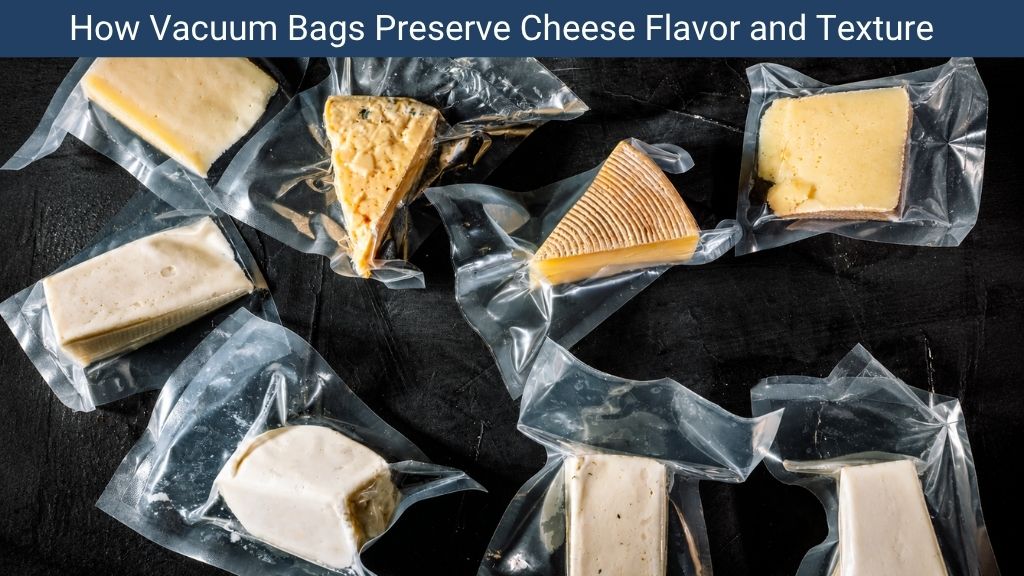
When cheese is vacuum-sealed in food-grade vacuum bags, residual oxygen is extracted before sealing, creating an anaerobic environment. This process halts aerobic microbial growth (bacteria and fungi that require oxygen) and prevents oxidative reactions that degrade fats and proteins. For aged cheeses like Cheddar, Parmigiano, and Gouda, this protection maintains the complex flavor compounds that develop through fermentation. Soft cheeses like Brie and Camembert benefit from reduced moisture loss, preserving their characteristic creamy texture.
The effectiveness depends on barrier film quality. Standard polyethylene bags allow oxygen migration within weeks, resulting in surface mold and off-flavors. Premium PA/EVOH co-extruded films used in Vishakha’s VISHVACU pouches restrict oxygen transmission to 2-5 cc/m²/day, maintaining anaerobic conditions for 3-6 months.
Cheese vacuum bags require specific characteristics to perform reliably at commercial scale. Nylon-polyethylene (PA/PE) combinations provide mechanical strength to resist puncture from sharp cheese edges and extended shelf life through transportation. Multi-layer constructions (7-9 layers) incorporating EVOH (ethylene vinyl alcohol) create superior oxygen barriers compared to single-material alternatives.
Clarity is essential for retail applications—consumers expect to see product quality, making transparent food vacuum bags preferable to opaque versions for fresh and young cheeses. Heat-seal integrity must withstand temperature fluctuations during shipping, particularly for air-freight exports crossing equatorial regions. Custom vacuum bag specifications allow producers to optimize thickness (25-100 microns) based on cheese type, storage duration, and transport conditions.
Bulk cheese producers achieve cost reduction by sourcing customized vacuum bags directly from manufacturers rather than purchasing pre-packaged formats. Wholesale vacuum bag pricing reflects manufacturing efficiency—importing containers of cheese vacuum bags from India’s producers costs 40-60% less than domestic production in Western countries while maintaining BRC-certified food safety standards.
Volume consolidation further improves economics. A cheese exporter ordering 500,000 units of customized vacuum bags in a single shipment qualifies for volume discounts and amortizes international freight costs across individual units. This approach also simplifies supply chain management—one qualified supplier replaces multiple regional vendors, reducing coordination overhead and ensuring consistency.
Our Other Product
Hard aged cheeses (Cheddar, Parmesan, Gruyère) develop complex flavors that depend on controlled fermentation and aging. Vacuum sealing prevents oxidative degradation of aromatic compounds, preserving the sensory profile that justifies premium pricing. Semi-soft varieties (Gouda, Edam, Taleggio) require moisture protection to maintain structural integrity throughout logistics chains spanning weeks.
Blue-veined cheeses face unique challenges—their characteristic mold (Penicillium roqueforti) must survive in anaerobic vacuum-sealed conditions, requiring manufacturers to provide minimal oxygen levels rather than complete removal. Artisanal soft cheeses (Brie, Camembert) demand pristine interior conditions; vacuum bags prevent surface contamination and excessive moisture loss that would compromise flavor and mouthfeel.
Fresh cheeses (Ricotta, Mozzarella, Paneer) have shorter shelf lives but benefit from vacuum protection during cold chain transport, extending retail availability from days to weeks. Specialty varieties (goat cheese, sheep cheese) serve premium market segments where packaging quality directly influences purchasing decisions.
European cheese manufacturers—particularly in France, Italy, Spain, and Netherlands—export substantial volumes requiring robust vacuum packaging. EU regulations governing cheese transportation necessitate oxygen-barrier protection that Indian manufacturers provide through certified food-contact films. These producers often source custom-printed vacuum bags showcasing protected designation of origin (PDO) labeling, which Indian manufacturers accomplish through advanced rotogravure printing.
North American cheese distributors import private-label vacuum bags from India for cheese re-packaging at distribution centers. U.S. retailers purchasing cheese by block consolidate multiple varieties into vacuum-sealed portions for consumer convenience, requiring high-volume sourcing of standard-size food vacuum bags.
Middle Eastern dairy companies importing European cheeses depend on vacuum packaging to maintain quality through hot-climate transportation and extended warehouse storage. Refrigerated chain infrastructure in GCC countries remains limited in interior regions, making vacuum sealing critical for product survival.
Australian and New Zealand cheese exporters increasingly source from India to reduce costs while maintaining compliance with strict food safety standards required by Japanese, Korean, and Southeast Asian importers.
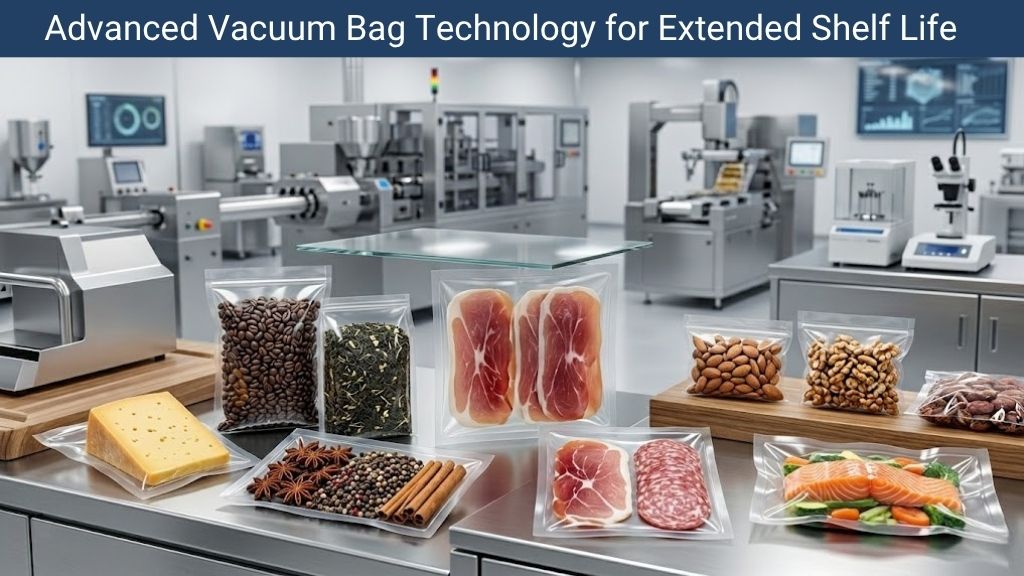
Vishakha’s VISHVACU line uses proprietary 9-layer PA/EVOH co-extrusion technology delivering oxygen transmission rates of 2-5 cc/m²/day—substantially superior to 5-7 layer alternatives common among competitors. This translates to extended shelf life that differentiates premium products in retail environments where freshness messaging drives purchasing decisions.
Customization capabilities distinguish Vishakha from commodity suppliers. Cheese producers specify exact dimensions, thickness, sealing type (3-side seal for blocks, gusseted for shredded varieties), and printing requirements. In-house rotogravure printing accommodates up to 9-color designs, enabling PDO labeling, nutritional information, and brand imagery without requiring secondary processing.
BRC Grade A certification ensures compliance with food safety standards across North America, Europe, Australia, and Asia-Pacific markets simultaneously. This single-source compliance eliminates the need for bulk cheese importers to qualify multiple suppliers or conduct redundant testing.
Bulk pricing reflects Vishakha’s manufacturing scale and operational efficiency. Volume orders of 100,000+ units achieve per-unit costs that compete favorably with commodity-grade alternatives while delivering superior barrier performance.
Material selection must prioritize oxygen barrier over cost alone. PA/EVOH multi-layer construction provides superior oxygen exclusion compared to PE-only or nylon-PE alternatives. Thickness should match cheese type—harder varieties tolerate 40-50 micron films, while soft cheeses require 60-80 microns to prevent mechanical puncture during handling.
Sealing windows—the temperature range within which film achieves hermetic seals—should be broad enough to accommodate production line variations. Heat-seal integrity testing at 70-90°C confirms that bags will seal reliably in commercial vacuum-sealing equipment without requiring operator skill adjustment.
Custom dimensions should match existing production workflows. Producers moving from pre-packaged to bulk vacuum bags achieve efficiency gains by specifying sizes that fit existing slicing equipment and retail packaging requirements. Gusseted or bottom-seal configurations optimize space utilization during containerized shipping.
Print specifications should include food-safe ink certifications and color accuracy validation against approved standards. European and American retailers require compliance with FDA and EU regulations governing food-contact printing inks.
BRC certification documents, mill test reports confirming oxygen transmission rates, and food contact compliance certificates accompany commercial shipments. Bulk importers require these documents for customs clearance and retail buyer approval. Manufacturers should provide certificates in formats compatible with importing country requirements—FDA formats for U.S. shipments, EFSA-aligned documentation for European destinations.
Origin certificates confirm manufacturing location, supporting trade preference claims for certain markets. Food safety documentation demonstrates compliance with HACCP principles during production, addressing retailer requirements for supplier vetting.
Custom documentation for branded vacuum bags includes color separation approvals and print sample verification, ensuring that delivered products match approved artwork.
An OTR of 5 cc/m²/day or lower maintains anaerobic conditions throughout 6-month storage and transport cycles. Premium 9-layer films achieve 2-5 cc/m², providing safety margin against unexpected delays or temperature fluctuations during shipping. Standard 5-layer alternatives (15-25 cc/m²/day) are adequate only for 4-8 week shelf life; longer duration requires premium barrier films.
Yes, using thickness variation and heat-seal adjustments. Hard cheeses require 40-50 micron films with standard sealing temperatures. Soft cheeses benefit from 70-80 micron films with lower sealing temperatures (65-75°C) to prevent heat damage to moisture-sensitive surfaces. A qualified supplier provides specifications for each cheese type, allowing single-source procurement of multiple SKUs.
Custom printing becomes cost-effective above 10,000-unit orders, with per-unit printing costs declining as order volume increases. Smaller producers often consolidate multiple product SKUs (aged, soft, specialty varieties) into single orders to achieve economies of scale. Alternatively, purchasing plain clear vacuum bags with separate label application reduces minimum order quantities.
Transparent bags allow visual inspection of product quality, critical for artisanal and specialty cheeses where appearance communicates craftsmanship and premium positioning. Opaque films slightly enhance oxygen barrier performance and reduce light-induced oxidation but limit consumer confidence in product visibility. Transparent bags dominate retail applications; opaque variants suit food-service and industrial packaging where aesthetic appeal is secondary to protection.
Verify that film heat-seal window (typically 65-85°C for food applications) aligns with existing vacuum-sealing equipment specifications. Confirm seal strength at the lower temperature limit to ensure reliable sealing without operator intervention. Request sample testing on production equipment before full-volume orders to identify any compatibility issues.
Avoid oil contamination on bag surfaces before sealing, as oils compromise adhesion between film layers. Remove surface moisture before vacuum sealing to prevent steam-related seal failures. Transport sealed bags horizontally when possible to minimize stress on heat-sealed seams. Storage temperatures below 25°C preserve long-term seal integrity; elevated ambient temperatures can gradually weaken polymer bonds.
Standard lead times are 4-6 weeks from artwork approval and payment. Plan procurement 8-12 weeks ahead of production to accommodate sample testing, specification finalization, manufacturing, and logistics. Establish relationships with suppliers offering expedited production (2-3 weeks) for emergency orders at modest cost premiums. Maintain safety stock equivalent to 6-8 weeks consumption to buffer against supply disruptions.
FDA compliance (21 CFR 177.1680) is mandatory for U.S. exports. European Union exports require EFSA compliance with Regulation (EU) 10/2011. Australian cheese exports require compliance with Food Standards Australia and New Zealand (FSANZ) regulations. BRC Grade A certification satisfies requirements across multiple markets simultaneously, eliminating redundant qualifications.
Cheese quality preservation depends fundamentally on vacuum packaging that exceeds commodity-grade standards. Specialized food vacuum bags incorporating multi-layer barrier films protect sensory attributes and extend shelf life in ways that generic food storage solutions cannot match. Bulk cheese manufacturers and exporters benefit from sourcing customized vacuum bags from India’s certified manufacturers, combining advanced barrier film technology with wholesale pricing that improves product economics.
Vishakha Polyfab’s VISHVACU vacuum bags deliver the barrier protection, customization flexibility, and regulatory compliance that cheese producers require. Whether protecting aged Parmigiano destined for North American retailers or supporting artisanal soft cheeses for European importers, premium vacuum bags engineered specifically for cheese applications ensure that flavor, texture, and sensory quality reach consumers intact.

Vishakha Polyfab Pvt. Ltd. is a global pioneer in high-barrier flexible packaging, specializing in advanced 9-layer co-extruded PA/EVOH-based films. Headquartered in Ahmedabad, India, the company utilizes world-class Brampton Engineering (Canada) and Aqua Frost® water-quenched technology to deliver superior shelf-life extension solutions. From Modified Atmosphere Packaging (MAP) to deep-draw thermoforming applications, Vishakha Polyfab delivers compliant, high-performance materials that protect product integrity throughout complex international supply chains. Their expertise in vacuum packaging, thermoforming, and lidding films helps enterprise-level brands in the food, pharmaceutical, and industrial sectors optimize packaging performance and sustainability.

Make Vishakha Polyfab the silent guardian of your products to preserve their vigour and enhance the quality of user interaction with them.
Sign Up for Our Newsletter
Corporate Head Office
Social Media
An ISO & BRCGS Certified Company


Manufacturing Address

