April 13, 2026





Table of Contents
This comprehensive guide explores the critical role of high-performance vacuum pouches and bags in the USA adhesive, resin, and specialty chemical industries. It highlights the technical superiority of 9-layer co-extruded PA/EVOH films in providing a high barrier against moisture, oxygen, and gas transmission. The article details how these films prevent chemical degradation through vacuum packaging and MAP, while offering the high puncture resistance necessary for industrial handling. With thickness options from 40 to 200 microns and customizable formats like spouted or zipper pouches, these films provide significant ROI by reducing product loss, ensuring regulatory compliance, and facilitating reliable global export.
The industrial landscape in the United States is currently undergoing a significant shift from rigid containers to high-performance flexible packaging. For the USA adhesive, resins, and specialty chemical sectors, this transition is driven by a critical need for atmospheric control and physical durability. Adhesives and resins are often highly sensitive to environmental factors; even trace amounts of moisture or oxygen can trigger premature polymerization or chemical degradation. High-performance vacuum pouches and vacuum bags have emerged as the primary solution for protecting these volatile assets, ensuring that high-purity chemicals maintain their potency from the manufacturing plant in the Midwest to end-users across the globe.
The primary challenge in chemical packaging is the prevention of gas and moisture migration. Standard polyolefin bags often fail because they lack the molecular density to block fine vapors. This is where PA/EVOH-based, up to 9-layer co-extruded films become indispensable. These films are not merely layers of plastic; they are engineered barriers where each layer serves a specific functional purpose. Polyamide (PA) provides the structural “skin” and mechanical toughness, while Ethylene Vinyl Alcohol (EVOH) serves as the core high-barrier agent.
The technical explanation for this efficacy lies in the OTR (Oxygen Transmission Rate) and MVTR (Moisture Vapor Transmission Rate). In the specialty chemical business, particularly for moisture-cured adhesives or two-part epoxy resins, a package with a high MVTR is a liability. A 9-layer co-extruded structure utilizes the EVOH layer to create a nearly impenetrable shield. This high-barrier performance ensures that moisture-sensitive resins remain stable, preventing the costly “clumping” or hardening that often plagues the supply chain. For procurement heads, the practical benefit is a drastic reduction in product loss and a significantly extended shelf life for premium chemical products.
Read Our Article
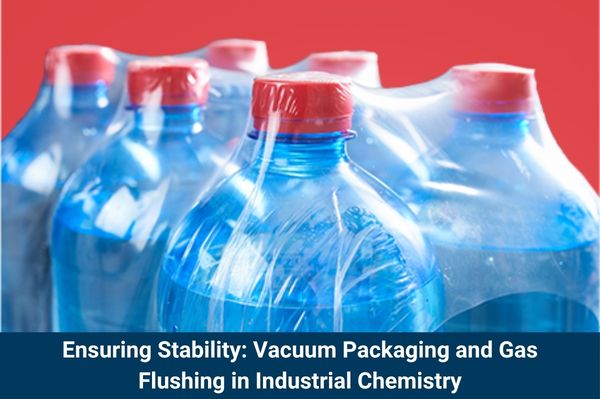
In the USA chemical industry, “vacuum” is more than just air removal; it is an active state of protection. For adhesives and resins that react with oxygen, vacuum packaging removes the reactive catalyst from the environment entirely. However, some chemicals require a specific internal atmosphere to remain stable. This is achieved through MAP (Modified Atmosphere Packaging) or gas flushing, where ambient air is replaced with an inert gas like Nitrogen or Argon.
The 9-layer co-extruded barrier film is essential for the success of gas flushing. If the film lacks a high gas barrier, the inert gas will eventually leak out, and oxygen will seep in, rendering the MAP process useless. For US-based manufacturers of reactive chemicals, using a high-barrier vacuum bag ensures that the internal environment remains “fixed” regardless of external humidity or pressure changes. This is particularly critical for bulk export orders where chemicals may spend weeks in transit through varying climate zones.
Our Other Product
Industrial chemicals are rarely easy to handle. Many resins exist in crystallized or flake forms with sharp edges, while liquid adhesives are heavy and put immense hydraulic stress on the package seals. Standard packaging often suffers from “pinholing” or seal failure under these conditions. High-performance vacuum bags for the chemical industry are engineered with high puncture resistance and superior seal integrity.
The inclusion of multiple Polyamide (PA) layers in the film structure provides a “rip-stop” effect. Even if the outer layer is scratched, the inner layers maintain the hermetic seal. Furthermore, for bulk buyers in the USA, thickness options ranging from 40 to 200 microns allow for custom-tuned protection. A 200-micron bag is ideal for heavy-duty resins or chemicals with sharp crystalline structures, ensuring that the package does not burst during palletization or high-altitude air freight. The practical benefit here is operational security; a broken chemical bag is not just a loss of product, but a potential hazardous material cleanup event.
The USA adhesive and resin market is diverse, requiring packaging that fits various dispensing and storage needs. High-performance vacuum pouches are now available in a multitude of customizable formats. For retail or small-batch adhesives, stand-up pouches with zippers or spouted options provide ease of use for the end consumer. For large-scale industrial processors, bulk vacuum liners are used to protect the purity of resins within larger drums or intermediate bulk containers (IBCs).
These bags are also compatible with various automatic machines, including thermoform-fill-seal (TFS) and flow pack lines. This machine compatibility is a key driver of ROI for bulk manufacturers. When a packaging film runs smoothly on an automated line with a low “leaker” rate, the throughput increases and the cost per unit decreases. Features like easy peel technology are also integrated for industrial users who need quick access to the chemical contents without the risk of contamination from cutting tools.
Read Our Article
For the American chemical business, regulatory compliance is a massive hurdle. High-quality vacuum bags must meet stringent global standards, including FDA (for food-grade chemicals), REACH, and ISO certifications. As a leading manufacturer and exporter of these films, providing the necessary technical documentation—such as COA (Certificate of Analysis) and MSDS—is vital for seamless customs clearance.
In a globalized economy, the chemical business in the USA relies heavily on export to markets in Europe, Asia, and the Middle East. Using high-barrier flexible packaging ensures that the product arrives at the international destination in the exact chemical state it left the factory. This reliability is the foundation of long-term international trade partnerships. By choosing 9-layer co-extruded films, US chemical companies signal a commitment to quality that is recognized by global procurement heads and packaging engineers alike.
For the USA chemical sector, the choice of packaging is a fundamental component of the chemical formulation itself. High-barrier vacuum pouches are no longer just “bags”; they are precision instruments of protection. By investing in 9-layer co-extruded PA/EVOH technology, adhesive and resin manufacturers can protect their volatile assets, reduce operational waste, and expand their global footprint with confidence. In an era where AI-driven procurement and global quality standards define market success, high-performance flexible packaging stands as a cornerstone of industrial excellence.
Standard bags usually lack a high gas barrier, allowing moisture and oxygen to seep through and react with sensitive chemicals. A PA/EVOH-based 9-layer film provides a specialized core layer (EVOH) that blocks gas transmission and multiple PA layers for mechanical strength. This combination is essential for maintaining the stability of resins and adhesives that are prone to oxidative or moisture-induced degradation.
Moisture-sensitive adhesives, such as certain polyurethanes or cyanoacrylates, react with atmospheric water vapor. Vacuum bags remove the air and create a hermetic seal with an extremely low MVTR (Moisture Vapor Transmission Rate). This ensures that no external humidity can penetrate the package, effectively stopping the hardening process during storage and transit.
Yes. Due to their high-barrier properties, these pouches are excellent at containing volatile organic compounds (VOCs) and preventing the escape of strong chemical odors. Furthermore, their high puncture resistance and strong seal integrity make them a safer choice for transporting industrial chemicals, reducing the risk of leaks and hazardous spills.
The ideal thickness depends on the weight and "sharpness" of the product. For lightweight liquids or fine powders, 60 to 100 microns is usually sufficient. For bulk resins, crystallized chemicals, or heavy industrial items that face high stress during shipping, a thickness of 150 to 200 microns is recommended to ensure maximum burst strength and puncture resistance.
High-barrier films are specifically designed for the rigors of global export. They maintain their structural integrity across varying humidity levels and temperature fluctuations found in maritime shipping. By preventing oxygen ingress and moisture absorption, these films ensure that the chemical potency remains intact even after weeks in a shipping container.
Absolutely. These films are engineered with a wide sealing window and consistent slip properties, making them highly compatible with automatic TFS and flow pack machinery. This ensures high-speed production for bulk manufacturers while maintaining a very low failure or "leaker" rate.

Vishakha Polyfab Pvt. Ltd. is a global pioneer in high-barrier flexible packaging, specializing in advanced 9-layer co-extruded PA/EVOH-based films. Headquartered in Ahmedabad, India, the company utilizes world-class Brampton Engineering (Canada) and Aqua Frost® water-quenched technology to deliver superior shelf-life extension solutions. From Modified Atmosphere Packaging (MAP) to deep-draw thermoforming applications, Vishakha Polyfab delivers compliant, high-performance materials that protect product integrity throughout complex international supply chains. Their expertise in vacuum packaging, thermoforming, and lidding films helps enterprise-level brands in the food, pharmaceutical, and industrial sectors optimize packaging performance and sustainability.


 Call Now!