
June 24, 2026
Table of Contents




Table of Contents
Packaging manufacturers and brand owners selecting between laminated pouches and co-extruded pouch technologies must evaluate trade-offs between processing methods, cost structures, barrier performance, sustainability attributes, and production flexibility. Laminating pouches utilize adhesive bonding joining multiple film layers; co-extruded pouches form integrated multi-layer structures through simultaneous extrusion. Both achieve superior barrier protection compared to single-layer films, yet differ fundamentally in manufacturing approach, quality consistency, environmental impact, and customization capabilities. Vishakha Polyfab’s flexible packaging pouches encompassing both technologies enable manufacturers to select optimal solutions matching product requirements. This analysis examines technical differences, cost implications, market suitability, and innovation trajectories for both pouch technologies.
Laminated pouches and co-extruded pouch designs both achieve multi-layer barrier properties impossible through single material construction. However, their manufacturing fundamentals differ profoundly, creating distinct advantages, limitations, and market applications. Understanding these differences enables informed packaging selection supporting product success and manufacturing efficiency.
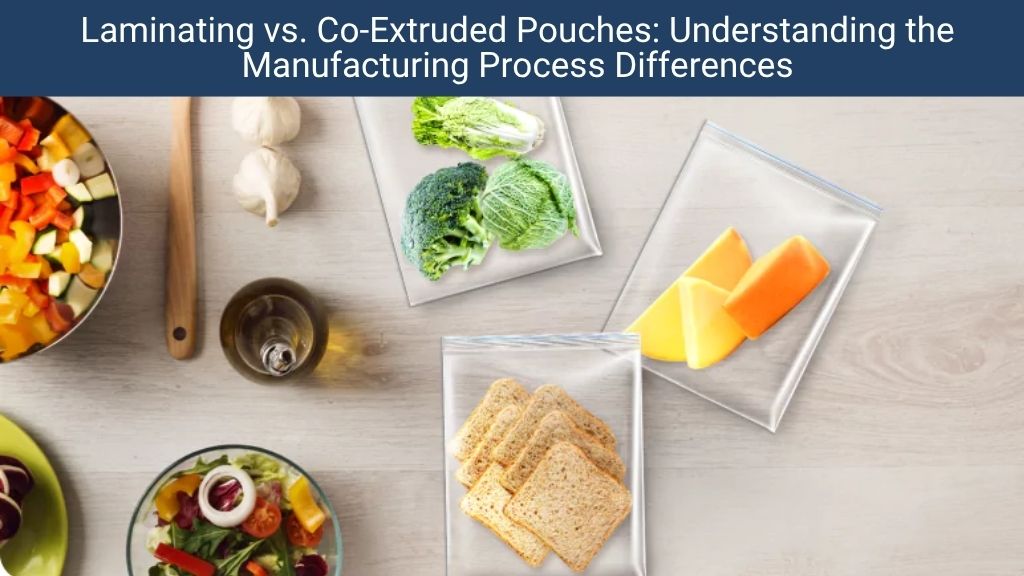
Laminating pouches combine separately manufactured films through adhesive bonding in secondary process step. Films are produced independently, stored, and subsequently joined using water based, solvent based, or hot melt adhesives. Co-extruded pouches meld multiple polymers simultaneously through common extrusion head creating integrated structure. Laminating pouches require adhesive curing; co-extruded structures solidify through cooling. These process differences create distinct quality characteristics, production timelines, and cost structures.
Laminated pouch construction optimizes each layer independently; nylon provides strength, polyethylene provides moisture barrier, aluminum blocks light. Layer thickness and material selection customize barrier properties precisely matching product requirements. Co-extruded pouches integrate layers creating continuous barrier minimizing delamination risk. Adhesive failures can compromise laminating pouches; co-extrusion eliminates adhesive dependency. Superior co-extruded barrier durability emerges during extended storage and harsh environmental exposure.
Premium products justifying higher cost leverage laminating pouches’ aesthetic flexibility and custom barrier optimization. Specialty foods, cosmetics, and pharmaceuticals utilize laminated pouch design accommodating precise barrier specifications matching unique product requirements. Short shelf-life products emphasizing visual appeal over extended preservation utilize laminating pouches enabling advanced printing and metallization without requiring superior co-extrusion complexity. Brand differentiation through custom material combinations and aesthetic innovation drives laminating pouches selection.
Co-extruded pouches achieve superior production efficiency through single-pass extrusion eliminating secondary adhesive application. Manufacturing simplification reduces costs 10 to 15 percent compared to equivalent laminating pouches. Consistent barrier properties throughout manufacturing runs improve quality predictability and reduce defect rates. Long shelf-life products requiring 6 to 12 month preservation depend on co-extrusion reliability impossible through laminating technology. Bulk commodity production emphasizes co-extrusion economics.
Our Other Product
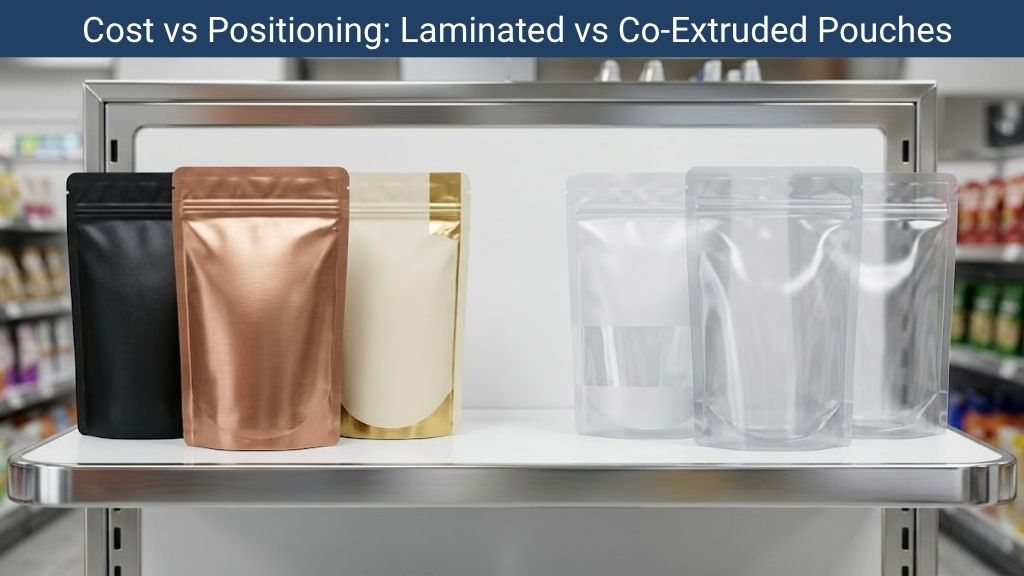
Laminating pouches cost 10 to 20 percent more than equivalent co-extruded alternatives due to adhesive and secondary processing. Premium product positioning justifies cost premium. Laminating pouch visual appeal and customization capability support retail shelf impact justifying premium pricing. Commodity products and budget focused brands select co-extruded pouches achieving cost efficiency. Decision framework balances barrier requirements against cost structure and market positioning.
Adhesive-free co-extruded pouch structure presents marginal recycling advantages compared to laminating pouches requiring adhesive removal. Laminating pouches’ adhesive dependency complicates material separation during recycling. Compostable pouch development favors co-extruded materials enabling complete biodegradation. Sustainability positioning increasingly favors co-extrusion technology simplicity. Brands emphasizing environmental responsibility consider co-extruded selection supporting circular economy objectives.
Vishakha’s VISHLAMI laminated pouches accommodate custom barrier specifications and aesthetic requirements. VISHVACU co-extruded pouch technology delivers superior barrier consistency and manufacturing efficiency. Dual capability enables manufacturers to select technology aligning with product requirements, cost targets, and market positioning. BRC certification covers both technologies ensuring regulatory compliance regardless of selection. Bulk pricing accommodates high-volume commodity production or premium niche offerings.
Water-based adhesives reduce environmental impact of laminating pouches improving sustainability positioning. Advanced co-extrusion configurations create barrier properties matching or exceeding lamination through layer optimization. Compostable layer integration into both technologies supports biodegradable pouch development. Barrier enhancement through nanoparticle incorporation achieves superior performance with reduced material thickness. Manufacturers increasingly recognize technology complementarity rather than competition.
Read Our Article
Co-extruded pouches maintain superior barrier consistency throughout shelf life due to integrated layer structure. Laminating pouches can experience adhesive degradation compromising barrier over extended storage. When shelf life exceeds 9 to 12 months, co-extrusion reliability justifies selection. Shorter shelf-life products emphasizing visual appeal favor laminating flexibility.
Co-extruded pouches cost 10 to 15 percent less than equivalent laminating alternatives. Commodity products prioritizing cost reduction select co-extrusion. Premium products justify laminating pouches cost premium through visual differentiation and brand positioning. Decision framework matches technology cost to market positioning and retail pricing strategy.
Standard laminating pouches can accommodate modest sterilization exposure but co-extruded alternatives provide superior reliability under extreme conditions. Verify adhesive compatibility with sterilization protocols prior to selection. Specialized co-extruded pouches engineered for pharmaceutical applications provide confidence laminating pouches cannot match.
Laminating pouches accommodate advanced printing and metallization creating premium visual appeal. Co-extruded pouches support printing but with less design flexibility. Brand differentiation through aesthetic innovation favors laminating technology. Commodity focused brands accept co-extrusion printing limitations prioritizing cost efficiency.
Laminated pouches and co-extruded pouch technologies represent complementary solutions addressing distinct market requirements rather than direct competitors. Laminating pouches enable premium brand positioning through aesthetic flexibility and custom barrier optimization. Co-extruded pouches deliver manufacturing efficiency and barrier consistency supporting high-volume commodity production. Strategic selection depends on balancing product requirements, cost targets, market positioning, and shelf-life objectives. Vishakha Polyfab’s capabilities spanning both technologies enable optimal packaging selection supporting competitive success across market segments.
Evaluate which flexible packaging pouch technology aligns with your product requirements and market strategy. Contact Vishakha Polyfab at sales.vppl@vishakha.com or plus 91 79 61907373 to discuss laminating pouch customization options or co-extruded pouch efficiency supporting your packaging objectives.

Vishakha Polyfab Pvt. Ltd. is a global pioneer in high-barrier flexible packaging, specializing in advanced 9-layer co-extruded PA/EVOH-based films. Headquartered in Ahmedabad, India, the company utilizes world-class Brampton Engineering (Canada) and Aqua Frost® water-quenched technology to deliver superior shelf-life extension solutions. From Modified Atmosphere Packaging (MAP) to deep-draw thermoforming applications, Vishakha Polyfab delivers compliant, high-performance materials that protect product integrity throughout complex international supply chains. Their expertise in vacuum packaging, thermoforming, and lidding films helps enterprise-level brands in the food, pharmaceutical, and industrial sectors optimize packaging performance and sustainability.

Make Vishakha Polyfab the silent guardian of your products to preserve their vigour and enhance the quality of user interaction with them.
Sign Up for Our Newsletter
Corporate Head Office
Social Media
An ISO & BRCGS Certified Company

Manufacturing Address
