
October 12, 2026
Table of Contents




Table of Contents
Protein packaging testing means proving a pack performs with the actual product, packing process and distribution route, not just the raw film. The workflow covers filling trials, seal inspection, leak checks, puncture assessment, storage evaluation and transport testing, each answering a different question. Packaging validation does not establish shelf life or food safety, since those need separate, product specific evidence. Vishakha PolyFab supplies VISHVACU, VISHFORM, VISHTOP, VISHBARR, VISHLAMI and REGAIN films for food and protein packaging, and buyers should define acceptance criteria with their own QA team, supplier and testing provider before validation begins.
Protein packaging testing means proving, with evidence rather than assumption, that a pack will hold up under the exact product, process and distribution conditions it is meant for. For exporters, QA departments and cold chain teams handling meat, poultry, fish and seafood, this distinction matters.
Choosing a film with the right barrier properties is not the same as approving a complete packaging system. A pack that performs well on a lab bench can still fail in a cold store or on a long export route.
Bone fragments, shell edges, variable fat content and uneven surfaces all complicate things, and a generic film specification cannot anticipate these on its own. The workflow below moves through distinct stages, from filling trials to transport testing, because each stage answers a different question about pack performance.
Before testing begins, the responsible team should define exactly what is being validated. This scope setting step determines which tests are relevant and which acceptance criteria apply.
Key variables to define up front include protein type and product presentation, bone in or boneless cuts, and whole fish, fillets or shell on seafood where relevant.
Also define pack size and fill weight, chilled or frozen distribution, intended storage duration and transport conditions, and the packaging format, filling equipment and outer shipping pack.
How these variables change what needs closer assessment:
Product Presentation | Primary Packaging Risk | What Needs Closer Assessment |
Boneless cuts, fillets | Seal consistency, vacuum retention | Seal inspection, leak checks |
Bone in cuts | Puncture from bone edges | Puncture and physical damage assessment |
Shell on seafood | Puncture from shell points, uneven pack fit | Puncture assessment, pack fit during filling trials |
Whole fish | Pack conformity around irregular shapes | Filling trial consistency, seal area inspection |
One film structure should not be assumed suitable for every category without evaluation. A pouch validated for boneless fillets should not be assumed adequate for bone in cuts without its own evaluation.
The first practical step is producing trial packs using the actual product, not a stand in. This stage checks whether the packaging format works with the real packing operation.
That includes product placement inside the pouch, pouch dimensions relative to the product, filling practicality and evacuation performance where vacuum is used. It also includes the ability to form a consistent pack run after run.
Record the material identification, product condition, equipment settings and operator observations during trials. This record becomes the reference point if a later stage reveals an issue.
Once representative packs exist, the seal area gets its own dedicated check before anything else. Visual seal inspection means looking for irregularities such as wrinkles, contamination in the seal line, incomplete fusion or inconsistent width.
Define inspection methods and acceptance criteria with the responsible QA team before testing. It is worth separating two things here: visual seal inspection and instrumented seal assessment such as seal strength testing.
A seal that looks acceptable is not proof it meets a strength or integrity standard, since visual appearance alone does not demonstrate seal integrity.
VISHVACU films from Vishakha PolyFab are built with an emphasis on consistent sealability and clarity, which supports a clean visual inspection stage. The inspection itself remains a step the buyer’s team carries out on the finished, filled pack.
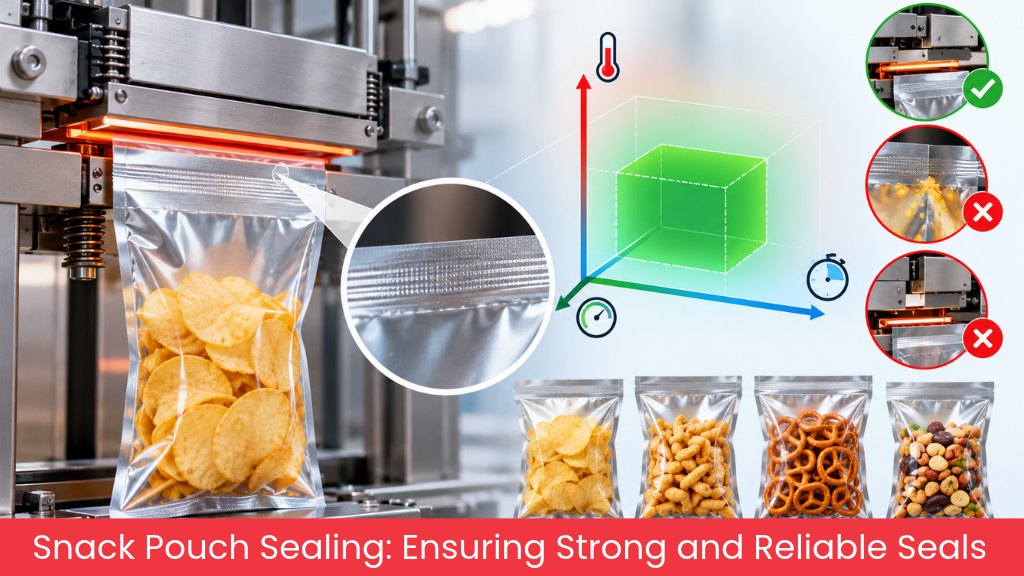
With seals inspected, the next stage looks at the complete pack rather than the seal area alone. The validation plan should specify which leak checks apply, when they are performed and what the acceptance criteria are, set by the responsible technical team.
For vacuum packed proteins specifically, this stage should include monitoring for loss of the intended vacuum condition over the evaluation period. If vacuum loss is observed, it calls for investigation rather than an automatic assumption about the cause.
A loss in vacuum could trace back to the seal, the film, product related puncture or handling. Leak and vacuum checks remain distinct from seal appearance, seal strength and barrier performance measured at other stages.
Packaging frequently has to survive contact with bones, shells, product edges and handling surfaces that flat-film testing alone may not fully represent. This stage focuses specifically on that risk, using the actual packed product rather than a flat film sample.
VISHVACU includes puncture resistant film options. VISHFORM thermoforming films are noted for high puncture and impact resistance, both relevant when packaging bone in meat or shell on seafood.
High puncture resistance is a documented film property to evaluate, not a claim that the pack is puncture proof.
When damage does occur during this stage, record where it happened and whether it relates to the product presentation, the pack fit or the handling arrangement. Increasing film thickness alone does not resolve every puncture issue if the underlying cause is pack fit or handling.
This stage assesses packs under the storage conditions and duration actually defined for the application. The validation plan should include evidence for each intended chilled or frozen condition, since evidence gathered under one condition does not automatically apply to the other.
A pack that holds up through ten days of chilled storage has not been validated for ninety days frozen, and the reverse is also true. The validation plan should record pack condition, seal condition, leakage or vacuum loss observations and physical damage over the agreed period.
Select temperature exposure conditions that represent the intended storage and distribution route. This applies equally to chilled meat packaging validation and to frozen protein packaging, since each distribution route carries its own temperature profile.
Packaging also cannot compensate for inadequate refrigeration. Storage evaluation tests the pack’s performance within the cold chain, not as a substitute for it.
The focus now shifts from the individual pouch to the full distribution configuration. That means outer cartons, pack arrangement within the carton and the handling sequence the shipment will actually go through.
The responsible technical team should select and document an appropriate transport test protocol that represents the planned route and handling conditions.
After the agreed handling or simulation sequence, assess the packs for seal condition, leakage and physical damage, this time in the context of the combined transport system rather than the individual pack.
A laboratory simulation is a useful proxy for what a shipment may face. It is not a guarantee of every shipment’s outcome, since real world handling varies by carrier, route and season.
This distinction deserves its own section because it is easy to blur after a successful validation run. Packaging integrity checks such as seal inspection, leak checks and puncture assessment do not by themselves establish a safe shelf life for the product inside.
Shelf life claims require product specific evidence gathered under the intended storage conditions. Food safety assessment requires appropriate product, process and microbiological evaluation carried out by qualified teams, a separate discipline from packaging validation.
Vacuum retention, pack clarity or the absence of visible leakage does not establish microbiological safety. Barrier data describes how a film resists moisture, gas, oxygen or aroma transfer, and cannot on its own determine a finished product’s shelf life.
A validated pack is one input into a shelf life or food safety decision, not the decision itself.
The final stage turns validation results into an approved, recorded specification. Buyers should confirm destination market requirements and documentation with their compliance team and importer.
The approval record should include the approved material and packaging format, dimensions and agreed tolerances, and the intended product and packing conditions.
It should also include the agreed storage and distribution scope, evaluation results and acceptance decisions from each stage, relevant supplier documentation, and the specification version with the names and roles of those who approved it.
Any change to the product, material, equipment, pack size or distribution conditions should trigger a review of whether revalidation is needed. A specification approved for one route or one protein cut is not automatically valid for another.
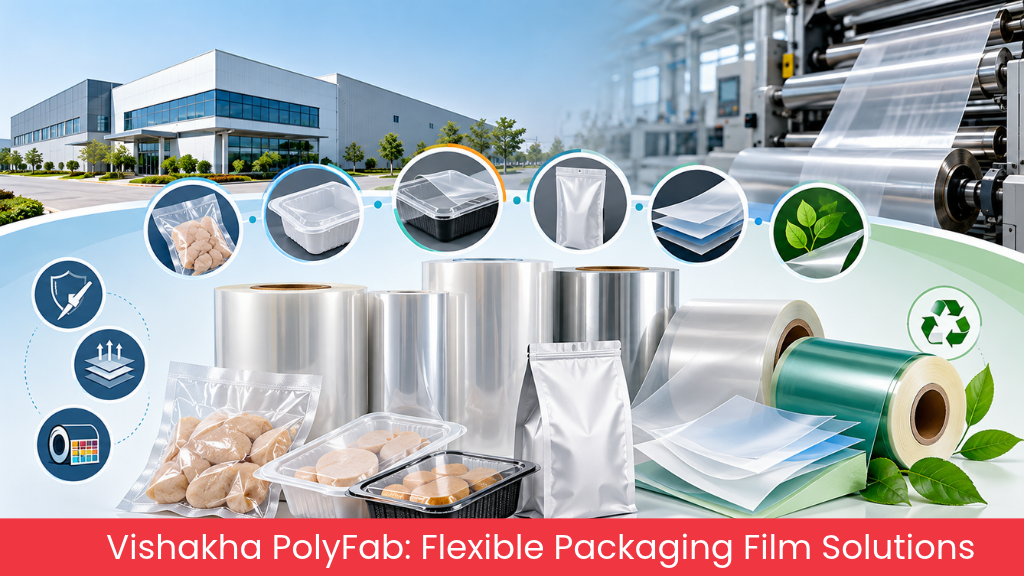
Vishakha PolyFab is a flexible packaging manufacturer based in Ahmedabad, Gujarat. Its product range for food and protein packaging includes VISHVACU vacuum pouches and bags, VISHFORM thermoforming films for deep draw and tray formats, VISHTOP top lidding films, VISHBARR barrier films for vertical form fill seal lines, VISHLAMI lamination films and REGAIN recyclable barrier films.
Within this range, VISHVACU is the primary reference point for meat, poultry and seafood packaging, offering PA/EVOH based films with documented puncture resistance, barrier protection and customizable gauge and print. Vishakha PolyFab operates under ISO and BRCGS certification, though buyer side validation remains the responsibility of the processor’s own QA team and testing provider.
Approving protein packaging for cold storage, transportation and export is a decision built from evidence gathered at each stage. That includes filling trials, seal inspection, leak checks, puncture assessment, storage evaluation and a transport evaluation that reflects the real distribution route.
Buyers who work through this sequence with their own QA team and testing provider end up with a specification they can defend. For protein processors and exporters evaluating vacuum pouches or thermoformed packs, Vishakha PolyFab welcomes a direct conversation about product requirements and packaging format.
Results should not be transferred automatically. The responsible QA team should assess differences in product shape, bone or shell exposure, fill weight and packing conditions to determine whether additional testing is needed. Share these differences with Vishakha PolyFab when reviewing material suitability.
One approval can cover both conditions if its validation scope includes appropriate evidence for each. Results from chilled storage alone do not establish frozen performance. Confirm the intended conditions with Vishakha PolyFab when selecting the proposed packaging.
No. Vacuum retention, clarity and the absence of visible leakage are packaging performance indicators, not evidence of shelf life. Vishakha PolyFab's films support consistent vacuum sealing, but shelf life claims require separate product specific evidence.
A defensible specification records the approved material and format, dimensions and tolerances, intended storage and distribution scope, and results from each validation stage. Vishakha PolyFab can supply material level documentation to support this record.
Treat any route change as a trigger for reassessment rather than an assumption of continued performance. Confirm the revised distribution conditions with Vishakha PolyFab before reapproving the specification.

Vishakha Polyfab Pvt. Ltd. is a global pioneer in high-barrier flexible packaging, specializing in advanced 9-layer co-extruded PA/EVOH-based films. Headquartered in Ahmedabad, India, the company utilizes world-class Brampton Engineering (Canada) and Aqua Frost® water-quenched technology to deliver superior shelf-life extension solutions. From Modified Atmosphere Packaging (MAP) to deep-draw thermoforming applications, Vishakha Polyfab delivers compliant, high-performance materials that protect product integrity throughout complex international supply chains. Their expertise in vacuum packaging, thermoforming, and lidding films helps enterprise-level brands in the food, pharmaceutical, and industrial sectors optimize packaging performance and sustainability.

Make Vishakha Polyfab the silent guardian of your products to preserve their vigour and enhance the quality of user interaction with them.
Sign Up for Our Newsletter
Corporate Head Office
Social Media
An ISO & BRCGS Certified Company


Manufacturing Address

