
July 20, 2026
Table of Contents




Table of Contents
Vacuum sealing works by removing air from around a product before sealing it inside a barrier film pouch, which slows oxidation, limits microbial growth, and prevents moisture loss or freezer burn. The effectiveness of vacuum sealing depends heavily on the film structure used, since the bag must combine a low oxygen transmission rate, strong seal integrity, and enough puncture resistance to survive both the vacuum process and the product being packed. This article explains how vacuum sealing bags work across cheese, ready to eat and processed food, poultry, frozen food, dry fruits and nuts, sous vide cooking, dairy, fresh produce, bulk institutional food, and pet food packaging. Vishakha Polyfab manufactures a wide range of vacuum pouches and vacuum bags under its VISHVACU range, built with PA and EVOH based co extruded barrier films suited to each of these applications.
Vacuum sealing removes most of the air, and therefore most of the oxygen, from inside a package before it is sealed. Since oxygen is the primary driver of aerobic microbial growth, enzymatic browning, and fat oxidation, reducing oxygen levels inside the pack significantly slows these spoilage pathways. The United States Department of Agriculture Food Safety and Inspection Service notes that removing air from food packaging reduces the rate of spoilage caused by oxygen dependent bacteria and slows oxidative rancidity in fatty foods, though it emphasizes that vacuum packaging must still be combined with proper refrigeration or freezing for perishable products, since vacuum sealing alone does not eliminate the risk of certain anaerobic pathogens such as Clostridium botulinum in improperly stored food.
Because of this, the film used for vacuum sealing must do more than simply hold a vacuum. It must maintain a low oxygen transmission rate over the entire shelf life of the product, resist puncture from bones, shells, or hard particles, and form a reliable seal even when moisture, fat, or crumbs contaminate the sealing area during production.
Cheese continues to release moisture and carbon dioxide even after packaging, which means the film must maintain a controlled barrier rather than an absolute seal in some soft cheese categories, while hard and semi hard cheeses benefit from a strong oxygen barrier that prevents mold growth and preserves flavor compounds. Vacuum bags for cheese are typically built with a puncture resistant BOPA nylon layer combined with an EVOH barrier layer, since cheese blocks often have firm or slightly sharp edges that can otherwise puncture a thin film during the vacuum cycle.
Ready to eat and processed foods often require the vacuum bag to survive additional heat processing such as pasteurization or retort sterilization after sealing. This demands a film structure with heat resistant outer layers, a strong barrier core, and a sealant layer rated for the specific time and temperature of the thermal process, ensuring the seal does not weaken or fail when the product is reheated by the end consumer.
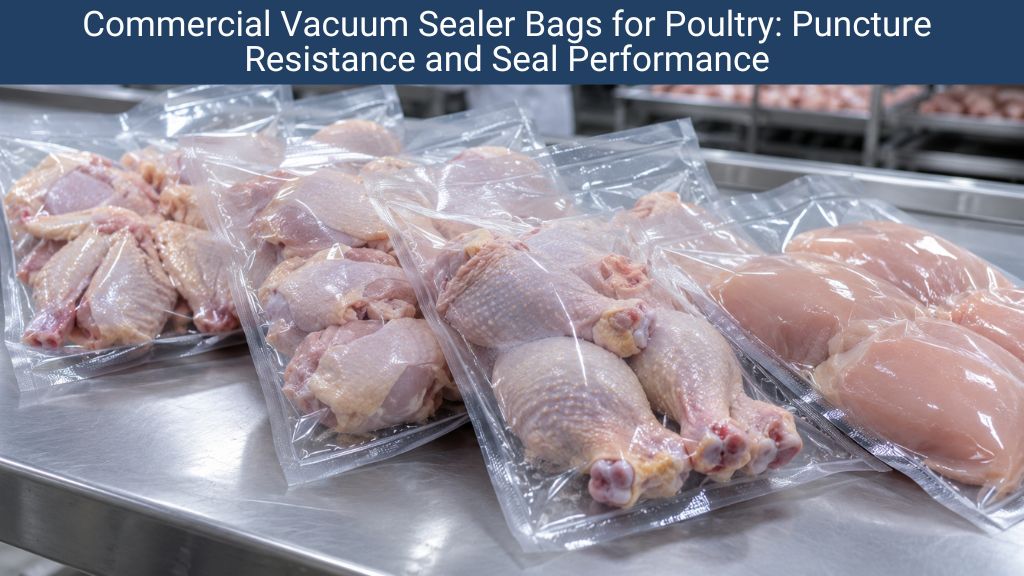
Poultry packaging places heavy demand on puncture resistance because of bone fragments and cartilage, combined with the need for a wide sealing window since poultry surfaces often carry residual fat and moisture that can interfere with sealing. Commercial poultry processors typically specify PA PE vacuum bags with high hot tack strength so that seals remain intact through the vacuum, chill, and distribution stages without leaking.
Our Other Product
Frozen food vacuum bags must remain flexible and crack resistant at low temperature while blocking moisture vapor transmission that causes freezer burn, the process where ice crystals sublimate from the food surface and cause dry, discolored patches. Buyers selecting frozen food vacuum bags should look at three factors together, the minimum flex crack temperature rating of the film, the oxygen transmission rate for fatty products, and the puncture resistance for items with irregular or sharp shapes such as bone in cuts or shellfish.
| Selection Factor | Why It Matters | Recommended Film Trait |
| Cold flex resistance | Prevents cracking during freezing and handling | PE or BOPA base layer |
| Oxygen transmission rate | Controls freezer burn and oxidation | EVOH or foil barrier layer |
| Puncture resistance | Prevents leaks from bone or shell edges | Nylon reinforced structure |
| Seal strength at low temperature | Maintains vacuum integrity during storage | Wide sealing window sealant |
Dry fruits, nuts, and dates are high in natural oils, which makes them prone to rancidity when exposed to oxygen over long storage periods. Vacuum sealing removes the oxygen that drives this oxidation, while a strong moisture barrier prevents the product from absorbing ambient humidity and losing its texture. Vishakha Polyfab specifically manufactures PA PE vacuum bags for dates packaging to extend the shelf life of this oxidation sensitive, high value product category.
Sous vide cooking involves sealing food in a vacuum bag and cooking it in a temperature controlled water bath for an extended period, sometimes several hours. This requires the vacuum bag film to remain stable and food safe at sustained cooking temperatures, typically up to around 85 to 95 degrees Celsius, without releasing chemicals into the food or losing seal integrity. Boilable vacuum pouches built for high temperature stability are essential for this application, since a standard vacuum bag not rated for heat can deform, weaken at the seal, or affect food safety during prolonged water bath cooking.
Dairy products present a wide range of vacuum packaging needs across the category. Hard cheese benefits from a high barrier vacuum bag to prevent mold and oxidation. Butter and ghee need a light and oxygen barrier to prevent rancidity. Paneer and fresh dairy curds need a bag that maintains hygienic conditions while allowing the product to be stored under refrigeration without excess moisture buildup inside the pack. In each case, the underlying challenge is balancing barrier protection with the product’s natural moisture behavior, which is why dairy vacuum bags are often customized by product type rather than treated as a single generic solution.
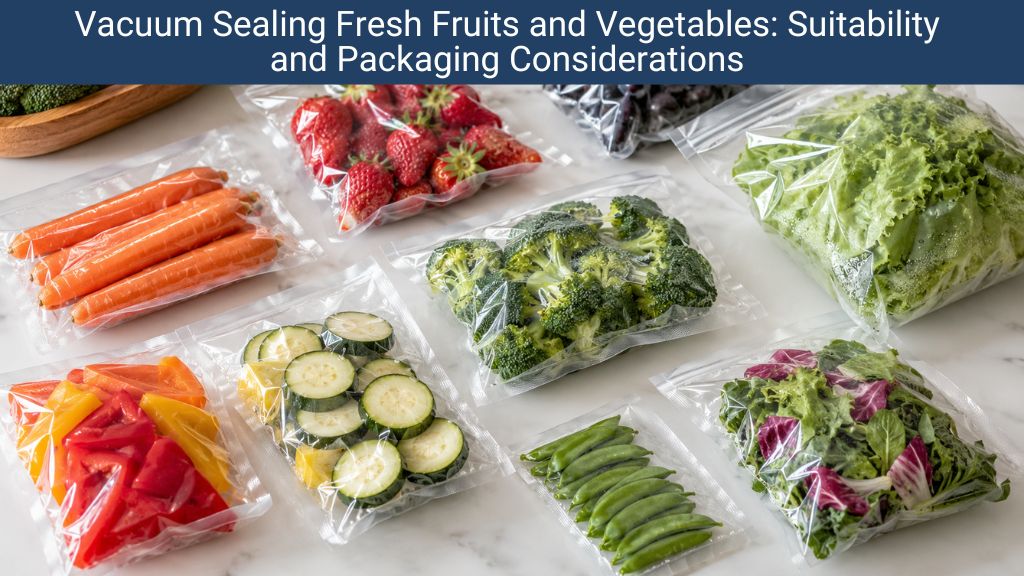
Fresh fruits and vegetables continue to respire after harvest, consuming oxygen and releasing carbon dioxide and moisture even inside a sealed package. Standard vacuum sealing, which removes nearly all oxygen, can be too aggressive for some fresh produce and may cause anaerobic respiration, off flavors, or accelerated spoilage in certain items. For this reason, some fresh produce is better suited to modified atmosphere packaging, where a controlled gas mixture rather than a full vacuum is used, while firmer vegetables and produce prepared for freezing or long term storage can be vacuum sealed effectively using a puncture resistant film to protect against sharp stems or edges.
Our Other Product
Bulk and institutional food packaging, used by restaurants, catering operations, and food service businesses, requires vacuum bags in larger formats that can handle heavier fill weights without seal failure. These bags typically use a thicker gauge film with reinforced seal strength, since bulk packs are handled more frequently during storage and transport and need to withstand repeated stacking and movement without losing vacuum integrity.
Pet food vacuum packaging is a growing category as pet owners increasingly seek freshness and portion control similar to what they expect from their own food. Pet food vacuum bags need to manage high fat content that is prone to rancidity, resist puncture from bone in treats or kibble edges, and maintain barrier performance over the often longer shelf life expected for pet food products compared to fresh human food.
Most vacuum sealing bags used commercially are built from PA and EVOH based co extruded structures rather than single layer plastic, because a single material cannot deliver puncture resistance, barrier protection, and sealability at once. A typical structure layers a tough outer film such as BOPA nylon, a barrier core such as EVOH, and a heat sealable inner layer such as PE, joined either through co extrusion or lamination.
| Layer Position | Common Material | Function |
| Outer layer | BOPA nylon or PET | Puncture and abrasion resistance |
| Core barrier layer | EVOH or PVDC | Oxygen and aroma barrier |
| Inner sealant layer | PE or CPP | Heat sealing and moisture resistance |
Vishakha Polyfab manufactures a comprehensive VISHVACU range covering vacuum pouches, gas flush pouches, barrier multilayer pouches, PA vacuum bags, PE vacuum bags, boilable vacuum pouches, PA PE vacuum bags for dates packaging, high puncture resistance pouches, and sterilization pouches, with film thickness ranging from 40 to 200 microns and both medium and high barrier co extruded structures. The films are manufactured under ISO and BRCGS certification and are engineered for compatibility with high speed automatic vacuum packaging lines, giving food processors in cheese, meat, poultry, seafood, dairy, dry fruit, and pet food categories a dependable barrier film matched to their specific product and process.
Vacuum sealing is a proven method for extending shelf life across a wide range of food categories, but its effectiveness depends entirely on using a film built for the specific product it protects. Cheese needs puncture resistance, poultry needs a wide sealing window, sous vide needs heat stability, and fresh produce sometimes needs a controlled rather than absolute vacuum. Understanding these differences allows food processors and packaging buyers to choose vacuum sealing bags that genuinely deliver the freshness, safety, and shelf life improvements the technology is capable of providing.
No, vacuum sealing significantly slows spoilage caused by oxygen exposure, but perishable foods still require proper refrigeration or freezing, since vacuum sealing does not eliminate all forms of microbial risk on its own.
Not all produce responds well to a full vacuum, since some items continue to respire after harvest and can develop off flavors under complete vacuum conditions. Firmer produce and items intended for freezing generally vacuum seal more successfully than delicate fresh produce.
A sous vide vacuum bag must remain stable and food safe at sustained cooking temperatures for extended periods, which requires a boilable, heat rated film rather than a standard vacuum bag.
Poultry surfaces often carry residual moisture and fat that can interfere with sealing, so a wide sealing window helps ensure a consistent, leak free seal even when the sealing area is not perfectly dry.
Freezer burn happens when moisture sublimates from a food's surface in the freezer, causing dry, discolored patches. A vacuum bag with a strong moisture barrier and a tight seal prevents this by minimizing the air space and moisture movement around the product.
Yes, dry fruit and nut vacuum bags focus primarily on oxygen barrier to prevent oil rancidity, while meat vacuum bags need both a strong oxygen barrier and high puncture resistance to handle bone and cartilage.

Vishakha Polyfab Pvt. Ltd. is a global pioneer in high-barrier flexible packaging, specializing in advanced 9-layer co-extruded PA/EVOH-based films. Headquartered in Ahmedabad, India, the company utilizes world-class Brampton Engineering (Canada) and Aqua Frost® water-quenched technology to deliver superior shelf-life extension solutions. From Modified Atmosphere Packaging (MAP) to deep-draw thermoforming applications, Vishakha Polyfab delivers compliant, high-performance materials that protect product integrity throughout complex international supply chains. Their expertise in vacuum packaging, thermoforming, and lidding films helps enterprise-level brands in the food, pharmaceutical, and industrial sectors optimize packaging performance and sustainability.

Make Vishakha Polyfab the silent guardian of your products to preserve their vigour and enhance the quality of user interaction with them.
Sign Up for Our Newsletter
Corporate Head Office
Social Media
An ISO & BRCGS Certified Company


Manufacturing Address

