
July 28, 2026
Table of Contents




Table of Contents
Lamination films are multi layer flexible packaging materials created by bonding two or more plastic, foil, or paper substrates together to combine the strengths of each layer into one structure. Common types include PET, BOPP, CPP, PE, BOPA, metallized BOPP, metallized PET, aluminium foil laminate, paper laminate, PVC laminated film, PVDC coated film, PA EVOH film, and multilayer plastic film. Each film brings a distinct property such as strength, clarity, printability, heat sealability, or barrier protection against oxygen, moisture, and light. Manufacturers combine these films through adhesive lamination or thermal lamination to build packaging that protects food, pharmaceuticals, and industrial goods while extending shelf life. Vishakha Polyfab manufactures a wide range of these laminated films under its VISHLAMI range, offering structures from 30 to 300 microns with up to nine layer co extrusion and nine color rotogravure and CI flexo printing for brands that need dependable barrier performance.
A lamination film is formed when two or more layers of film, foil, or paper are bonded together, usually with an adhesive or through heat and pressure, so the combined structure performs better than any single layer alone. A plain PE film seals well but offers little barrier protection. A plain foil blocks oxygen and light completely but cannot be heat sealed on its own and tears easily. When these materials are laminated together, the resulting film gets the sealing strength of PE and the barrier performance of foil in one roll.
This is why laminated films dominate flexible packaging for food, pharmaceuticals, personal care, and industrial products. According to postharvest and food packaging research published by the United States Department of Agriculture, oxygen and moisture ingress are among the leading causes of quality loss in packaged food, which makes barrier layer selection a critical engineering decision rather than a cosmetic one.
Polyester film, commonly called PET film, is valued for its high tensile strength, excellent printability, dimensional stability, and clarity. It performs well as the outer or print layer in a laminate because it resists puncture and holds fine graphic detail during rotogravure or CI flexo printing. PET alone has moderate oxygen barrier properties, so it is often paired with a sealant layer such as CPP or PE, or with a metallized or foil layer when a stronger barrier is required.
Biaxially oriented polypropylene film, or BOPP film, is stretched in two directions during manufacturing, which gives it high clarity, stiffness, and a smooth surface for printing. BOPP is widely used in snack food, confectionery, and label applications because it offers a good balance of gloss, cost efficiency, and moisture resistance. It is frequently laminated with metallized BOPP or CPP to add barrier and sealing performance.
Cast polypropylene Film, or CPP film, is mainly used as the innermost sealant layer in a laminate structure. It offers a consistently low seal initiation temperature, good hot tack strength, and clarity, which makes it suitable for high speed form fill seal machines. CPP is commonly paired with PET or BOPP as the outer print layer.
Polyethylene film, available in low density, linear low density, and high density grades, is prized for toughness, flexibility, and heat sealability. PE is often the sealant layer in a laminate and also serves as a moisture barrier, since polyethylene naturally resists water vapor transmission better than it resists oxygen transmission.
Biaxially oriented polyamide, or BOPA nylon film, provides excellent puncture resistance, toughness at low temperature, and gas barrier properties. BOPA is frequently used in laminates meant for vacuum packaging of meat, cheese, and other products where sharp bone edges or hard particles could otherwise puncture the pack.
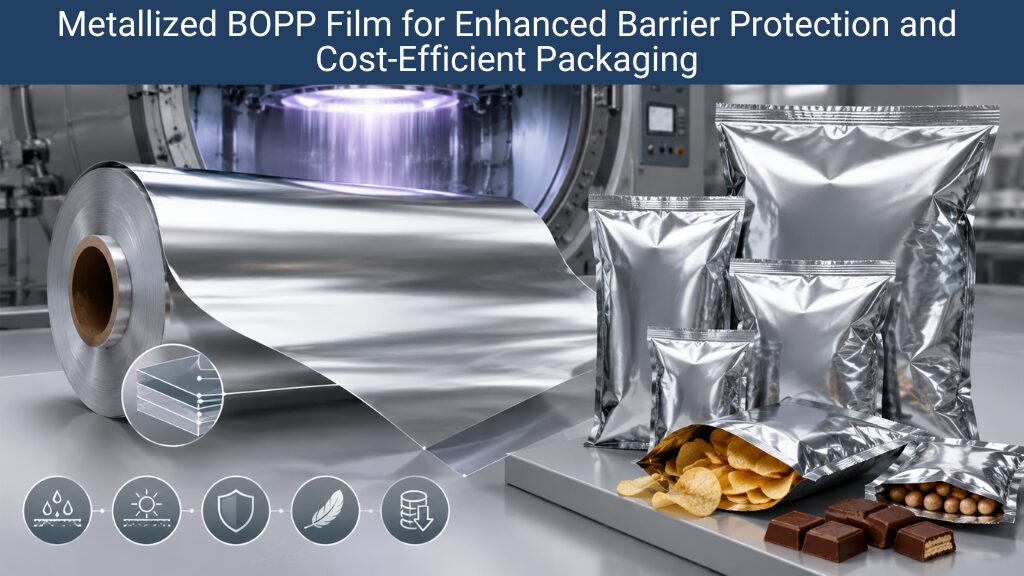
Metallized BOPP Film is created by vacuum depositing a thin layer of aluminium onto BOPP film. This dramatically improves the oxygen, light, and moisture barrier compared to plain BOPP while keeping the structure lightweight and cost efficient, which is why it is common in snack food and confectionery laminates as a more economical alternative to foil.
Metallized PET combines the strength and printability of polyester with a vacuum deposited aluminium layer for high barrier performance against oxygen, moisture, aroma, and ultraviolet light. It is widely used in coffee, dry snack, and pharmaceutical laminates where product freshness and shelf appeal both matter.
Aluminium foil laminate uses a thin foil layer, typically between 7 and 12 microns, to deliver the highest possible barrier against oxygen, moisture, light, and aroma migration. Foil laminates are the standard choice for retort pouches, UHT dairy packaging, and pharmaceutical blister lidding where an absolute barrier is required.
Our Other Product
Paper laminates combine kraft paper or other paper substrates with a plastic or foil layer to add heat sealability, moisture resistance, and grease resistance while keeping a natural, sustainable look. Paper laminates are increasingly requested by brands responding to consumer demand for recyclable or paper forward packaging formats.
Polyvinyl chloride laminated film, or PVC laminated film, offers good clarity, printability, and dimensional stability and is used in select shrink label and non food packaging laminates. Because of regional regulatory considerations around chlorinated plastics, PVC use in food contact laminates has declined in many markets in favor of polyolefin alternatives.
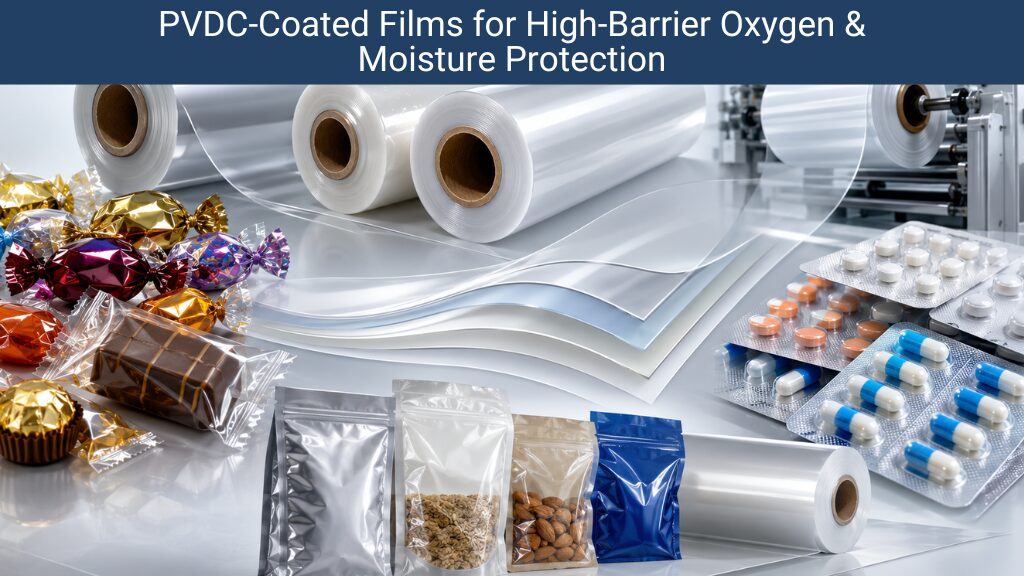
Polyvinylidene chloride, or PVDC, is applied as a thin coating on a base film such as PET, BOPP, or nylon to significantly reduce oxygen and moisture transmission. PVDC coated films remain a proven high barrier option for confectionery and pharmaceutical blister applications, though EVOH based structures have become a common alternative in many food packaging laminates.
Films built with polyamide, commonly called PA or nylon, combined with ethylene vinyl alcohol, known as EVOH, deliver one of the most effective oxygen barriers available in flexible packaging. EVOH is highly sensitive to humidity, so it is typically sandwiched between polyolefin layers in a co extruded structure. Vishakha Polyfab manufactures co extruded PA EVOH laminated films up to nine layers, offering both medium barrier and high barrier grades depending on the oxygen transmission rate a product requires.
Multilayer plastic films combine three, five, seven, or nine layers of different polymers such as PA, EVOH, PE, and tie layers in a single co extrusion or lamination process. Each layer contributes a specific function such as strength, barrier, or seal, which allows packaging engineers to fine tune performance while controlling total film thickness and cost.
| Film Type | Primary Function | Barrier Level | Typical Role in Laminate |
| PET Film | Strength and print clarity | Moderate | Outer or print layer |
| BOPP Film | Gloss and stiffness | Low to moderate | Outer layer or label film |
| CPP Film | Heat seal performance | Low | Innermost sealant layer |
| PE Film | Flexibility and moisture resistance | Low to moderate | Sealant or moisture barrier |
| BOPA nylon Film | Puncture resistance | Moderate to high | Mid layer for vacuum packs |
| Metallized BOPP Film | Cost efficient barrier | Moderate to high | Barrier layer |
| Metallized PET | High barrier with strength | High | Barrier and print layer |
| Aluminium foil | Absolute barrier | Highest | Core barrier layer |
| Paper laminate | Sustainability and grease resistance | Low to moderate | Outer layer |
| PVC film | Clarity for labels | Low | Shrink label applications |
| PVDC coating film | High oxygen and moisture barrier | High | Coating on base film |
| PA EVOH Film | Oxygen barrier | High | Co extruded core barrier layer |
| Multilayer plastic film | Custom multi function performance | Adjustable by design | Complete structure |
There are two widely used lamination methods in the flexible packaging industry.
Vishakha Polyfab offers thermal laminated films that can be bonded to rigid substrate sheets in medium barrier nylon based and high barrier EVOH based co extruded structures up to nine layers, giving converters flexibility to choose the right barrier level for the end application.
Our Other Product
Selecting a lamination film structure depends on several factors working together rather than any single property.
Vishakha Polyfab produces a comprehensive VISHLAMI range of laminated films that includes PET, BOPP, CPP, PE, BOPA, metallized BOPP, metallized PET, aluminium foil laminate, paper laminate, and PA EVOH based multilayer barrier structures. The films are available from 30 to 300 microns thickness, with up to nine color rotogravure and CI flexo printing, and in natural, pigmented, or tinted finishes. As an ISO and BRCGS certified manufacturer, Vishakha Polyfab supports food, dairy, snack, pharmaceutical, and industrial packaging brands with laminated films engineered to the exact oxygen transmission rate and mechanical strength their product needs, along with in house application development support to help select the right structure for a specific packaging line and product category.
Every lamination film type discussed above, from PET and BOPP to foil and PA EVOH structures, plays a specific role in building a laminate that protects a product, extends its shelf life, and presents it attractively on the shelf. Understanding what each film contributes makes it easier for packaging teams to specify the right combination for their category, whether that is a snack pouch that only needs moderate barrier and good gloss, or a dairy pack that needs the highest possible protection from oxygen and light. Working with an experienced laminated film manufacturer that can customize thickness, barrier level, and print finish helps brands balance performance with cost across their packaging portfolio.
Lamination film generally refers to the individual film substrate used in the lamination process, while laminated film refers to the finished multi layer structure created after two or more films have been bonded together.
Aluminium foil laminate offers the highest overall barrier against oxygen, moisture, light, and aroma. For applications where transparency is still required, a high barrier PA EVOH co extruded film is the closest alternative.
Yes, PET and BOPP are commonly laminated together or paired with CPP and metallized layers to combine strength, clarity, and barrier performance in food and confectionery packaging.
PVC use in food contact laminates has declined in many regions due to regulatory scrutiny of chlorinated plastics, with polyolefin and PET based structures becoming the preferred alternative for most new packaging designs.
Laminated films typically range from around 30 microns for lightweight flexible pouches to 300 microns for heavier duty or rigid substrate laminated applications, depending on the barrier and mechanical strength required.
EVOH, or ethylene vinyl alcohol, provides one of the strongest oxygen barriers among flexible packaging polymers. It is combined with polyamide and polyolefin layers in a co extruded structure to protect oxygen sensitive food and pharmaceutical products.
Recyclability depends on the specific structure. Multi material laminates combining different polymer families are harder to recycle than mono material structures, which is why the packaging industry is increasingly developing mono PE or mono PP laminated films designed for mechanical recycling.

Vishakha Polyfab Pvt. Ltd. is a global pioneer in high-barrier flexible packaging, specializing in advanced 9-layer co-extruded PA/EVOH-based films. Headquartered in Ahmedabad, India, the company utilizes world-class Brampton Engineering (Canada) and Aqua Frost® water-quenched technology to deliver superior shelf-life extension solutions. From Modified Atmosphere Packaging (MAP) to deep-draw thermoforming applications, Vishakha Polyfab delivers compliant, high-performance materials that protect product integrity throughout complex international supply chains. Their expertise in vacuum packaging, thermoforming, and lidding films helps enterprise-level brands in the food, pharmaceutical, and industrial sectors optimize packaging performance and sustainability.

Make Vishakha Polyfab the silent guardian of your products to preserve their vigour and enhance the quality of user interaction with them.
Sign Up for Our Newsletter
Corporate Head Office
Social Media
An ISO & BRCGS Certified Company

Manufacturing Address

